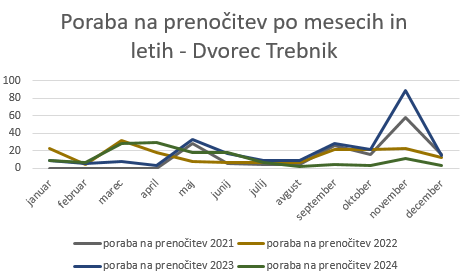
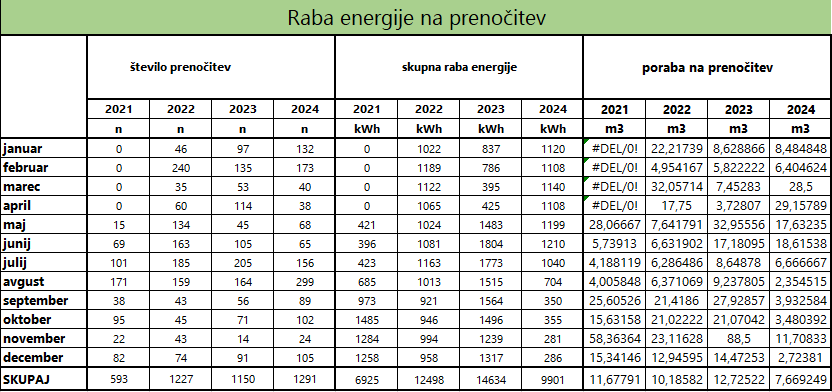
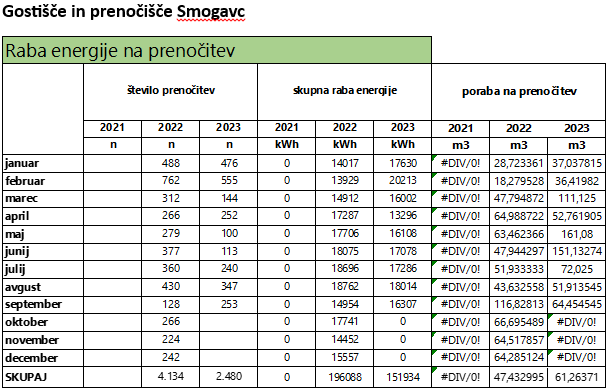
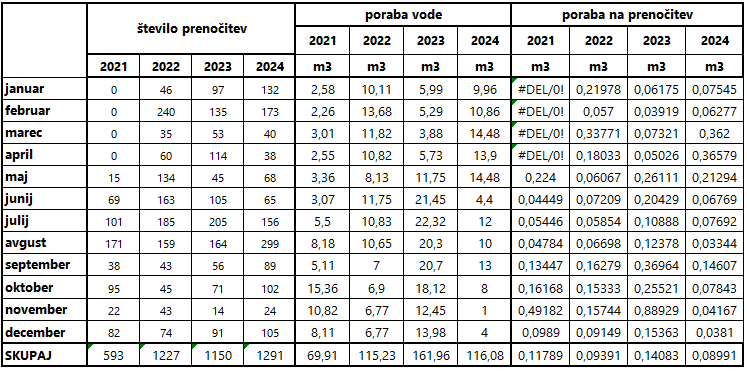
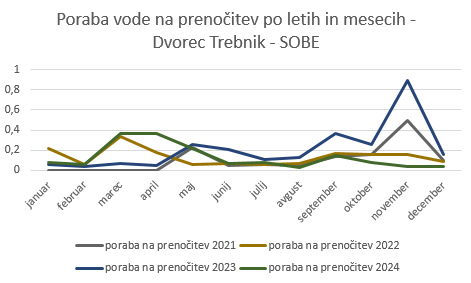
Below we present the water and energy consumption data of our providers holding a green environmental label (Dvorec Trebnik – Rooms and Smogavc Guesthouse and Inn), both of which are successfully developing their story of sustainable business.
The average daily consumption per person in Slovenia is:
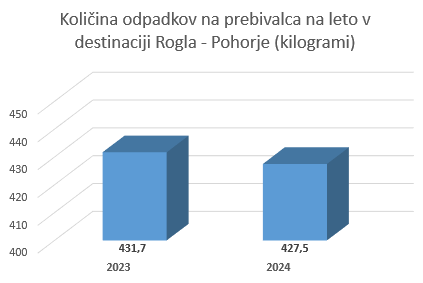
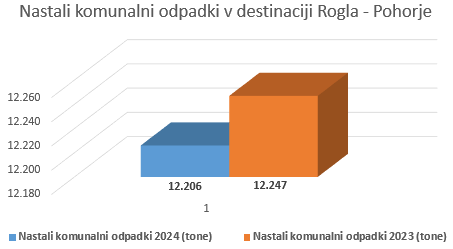
On average, hotels consume three times more per guest overnight. From the table below, it is clear that the providers holding a green environmental label operate more ecologically, resulting in water and energy consumption below the Slovenian average. As occupancy rates increase, their operations become even more efficient and cost-effective, contributing to long-term positive business results. The impact of a provider’s commitment to sustainability (preserving ecosystems for future generations) is clearly evident.
Let’s protect the environment. We only have one. So let’s make sure our planet stays beautiful.
Source: NIST, summarized from SURS
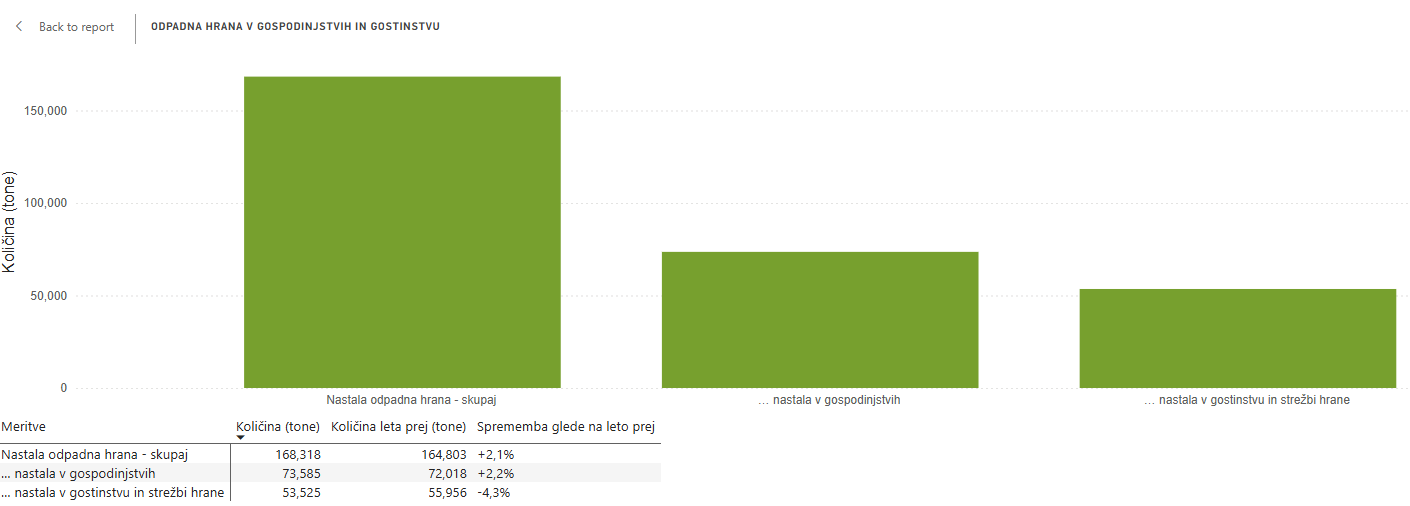
Data for Slovenia:
Source: NIST, summarized from SURS
Thank you for taking care of nature and the environment. Our planet will be grateful.
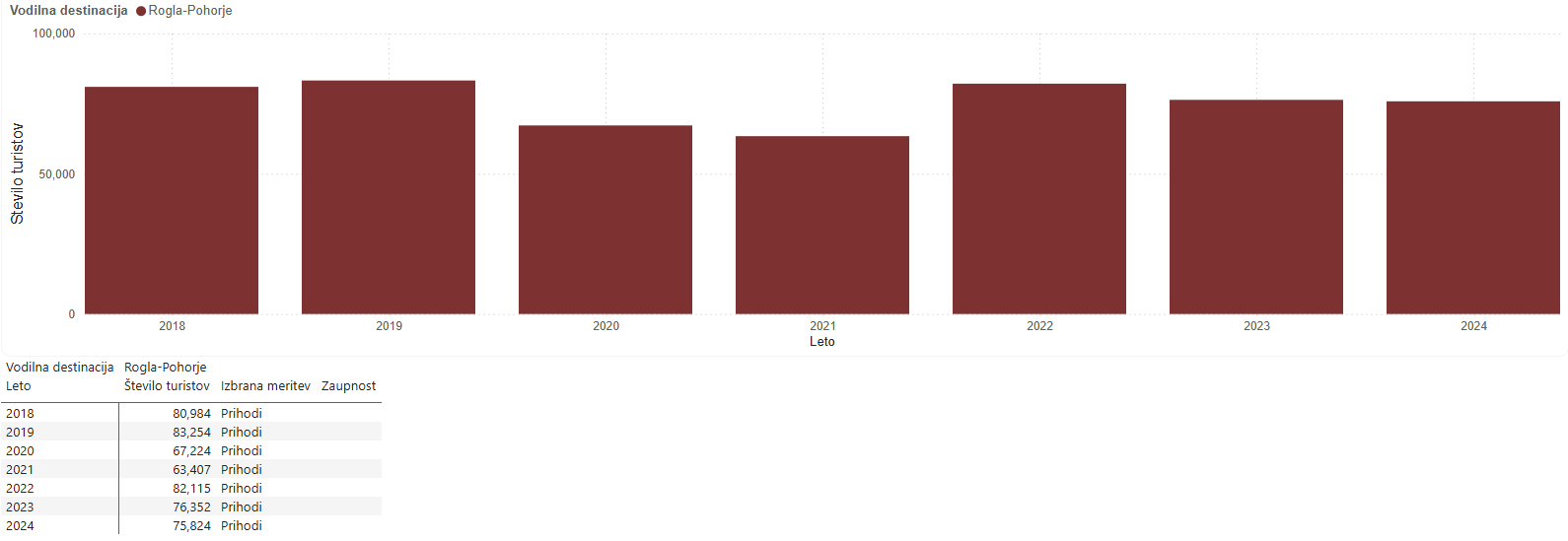
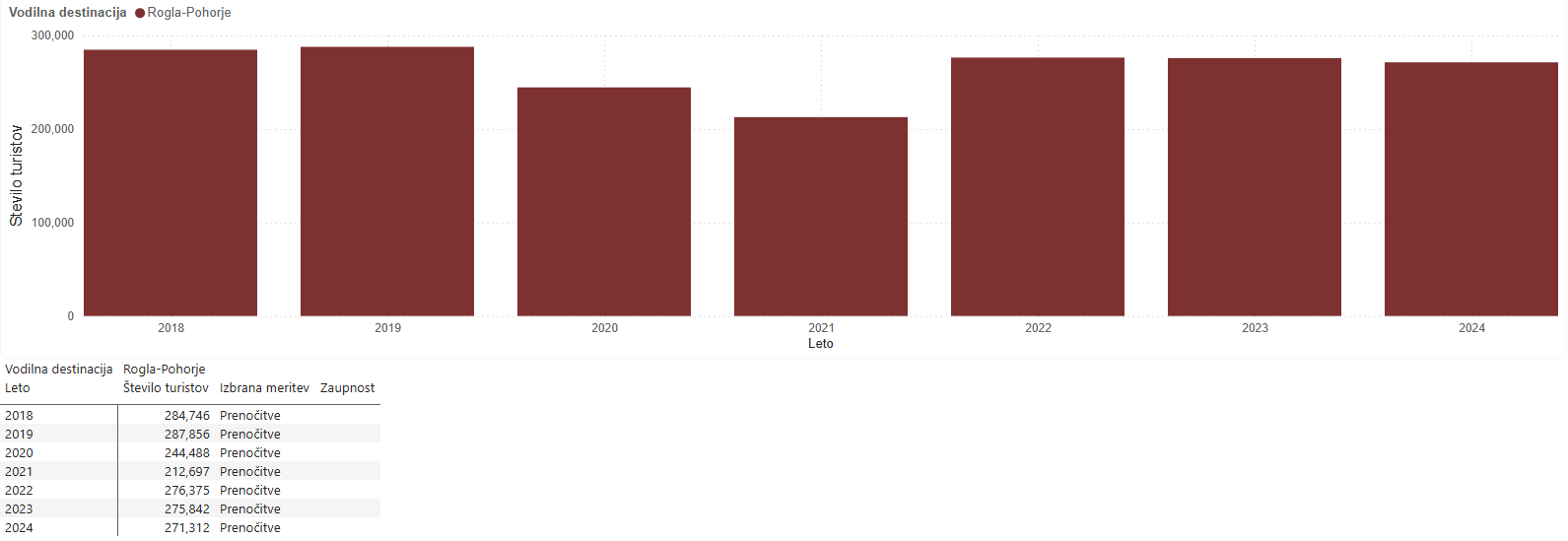
Source: NIST, summarized from SURS
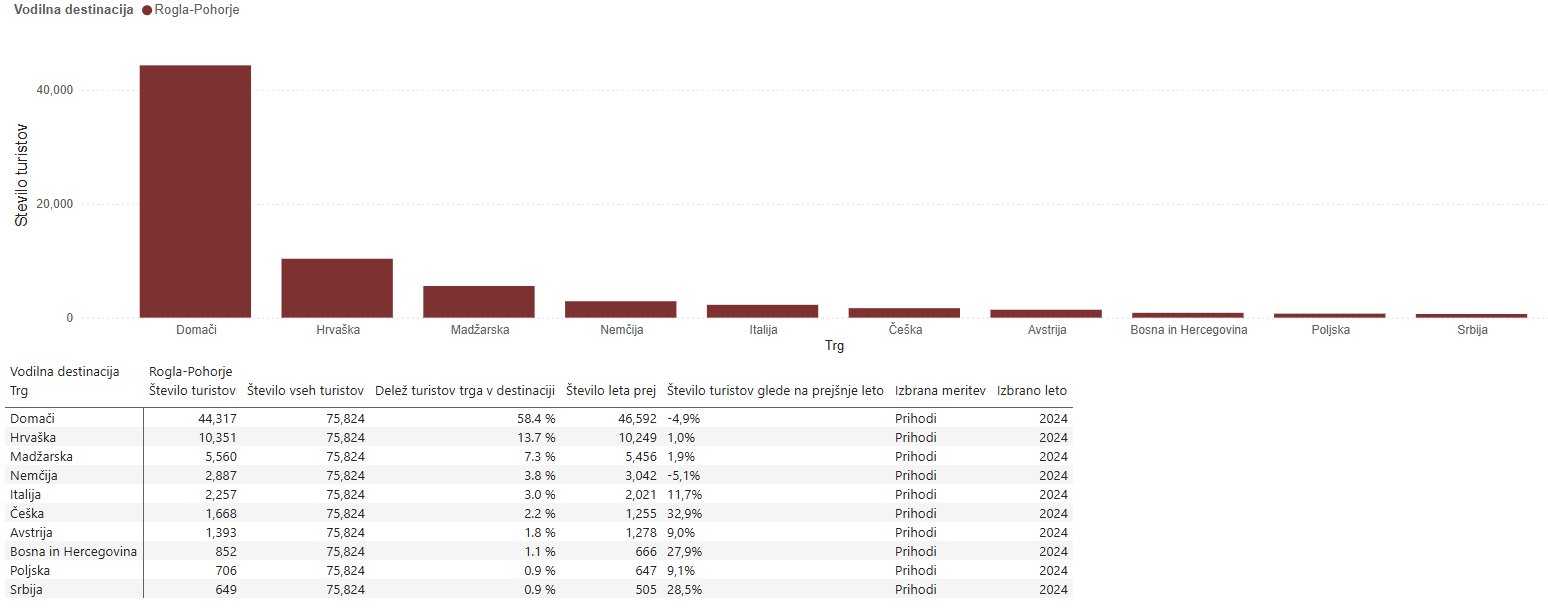
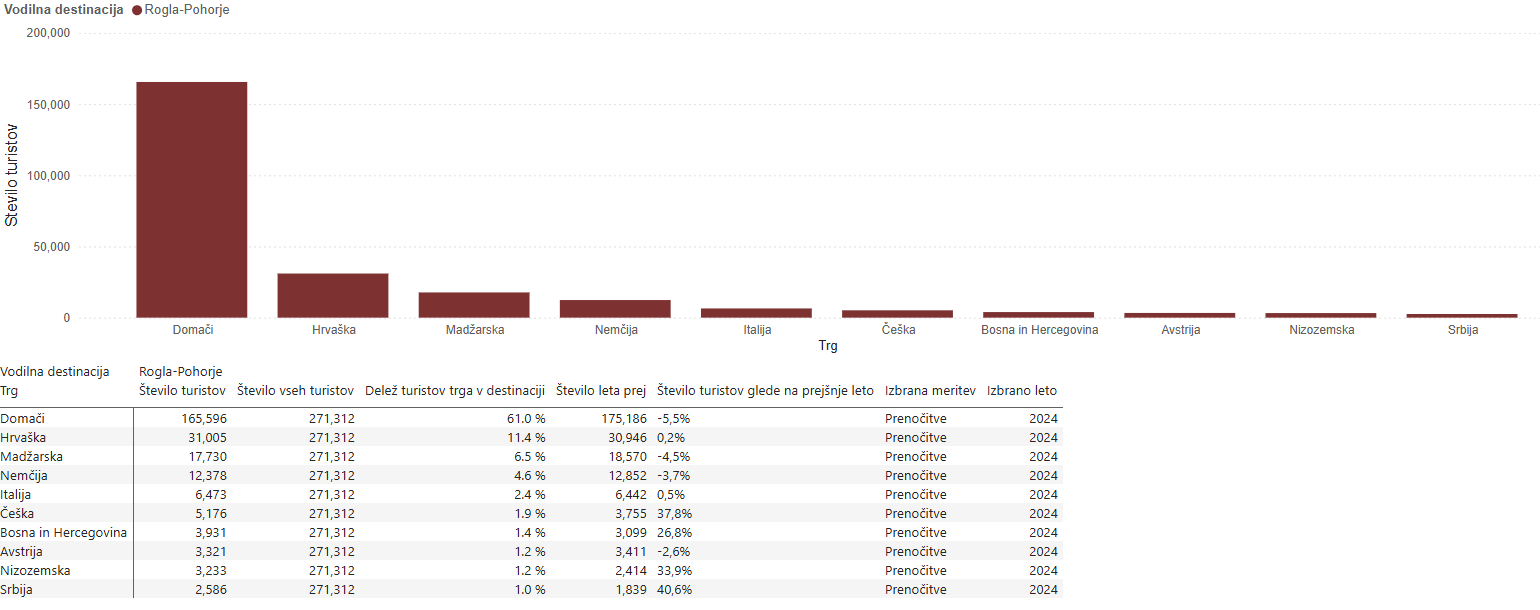
Source: NIST, summarized from SURS
In 2025, we observed a 2.7% increase in arrivals compared to 2024. Overnight stays also rose by 0.8%. The impact of the two main seasons—winter and summer—is still noticeable, so we will continue to place greater emphasis on de-seasonalization.


Source: NIST, summarized from SURS
By arrivals, domestic tourists still make up the majority, but in 2025 the share of foreign tourists also increased, reaching 42.9%.
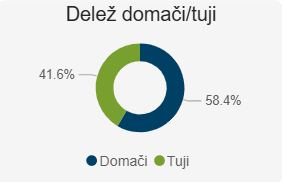
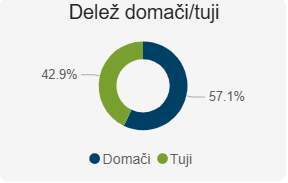
Source: NIST, summarized from SURS
When it comes to overnight stays, the difference is much larger. For both 2024 and 2025, the structure remains the same: domestic tourists account for 61% of overnight stays, while foreign tourists make up 39%.
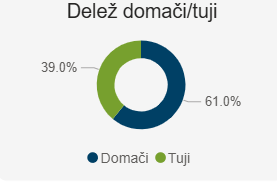
Source: NIST, summarized from SURS
Source: NIST, summarized from SURS
Methodological Explanations
According to the methodology of the World Tourism Organization (UNWTO), economically active persons in tourism include those working in the following activities (based on the Standard Classification of Activities – SKD 2008):
According to the methodology of the Organisation for Economic Co-operation and Development (OECD), economically active persons in tourism include those working in the following activities (SKD 2008):
Hotel and similar accommodation activities: I55.10, I55.20, I55.30, I55.90, L68.10, L68.20, L68.31, L68.32
Food and beverage service activities: I56.10, I56.29, I56.30
Passenger transport: H49.10, H49.32, H49.39, H50.10, H50.30, H51.10
Supporting passenger transport services: H52.21, H52.22, H52.23
Rental of transport equipment: N77.11, N77.12
Travel agency and other reservation-related activities: N79.11, N79.12, N79.90
Cultural activities: R90.01, R90.02, R90.03, R90.04, R91.02, R91.03, R91.04
Sports and recreational activities: N77.21, R92.00, R93.11, R93.13, R93.19, R93.21, R93.29
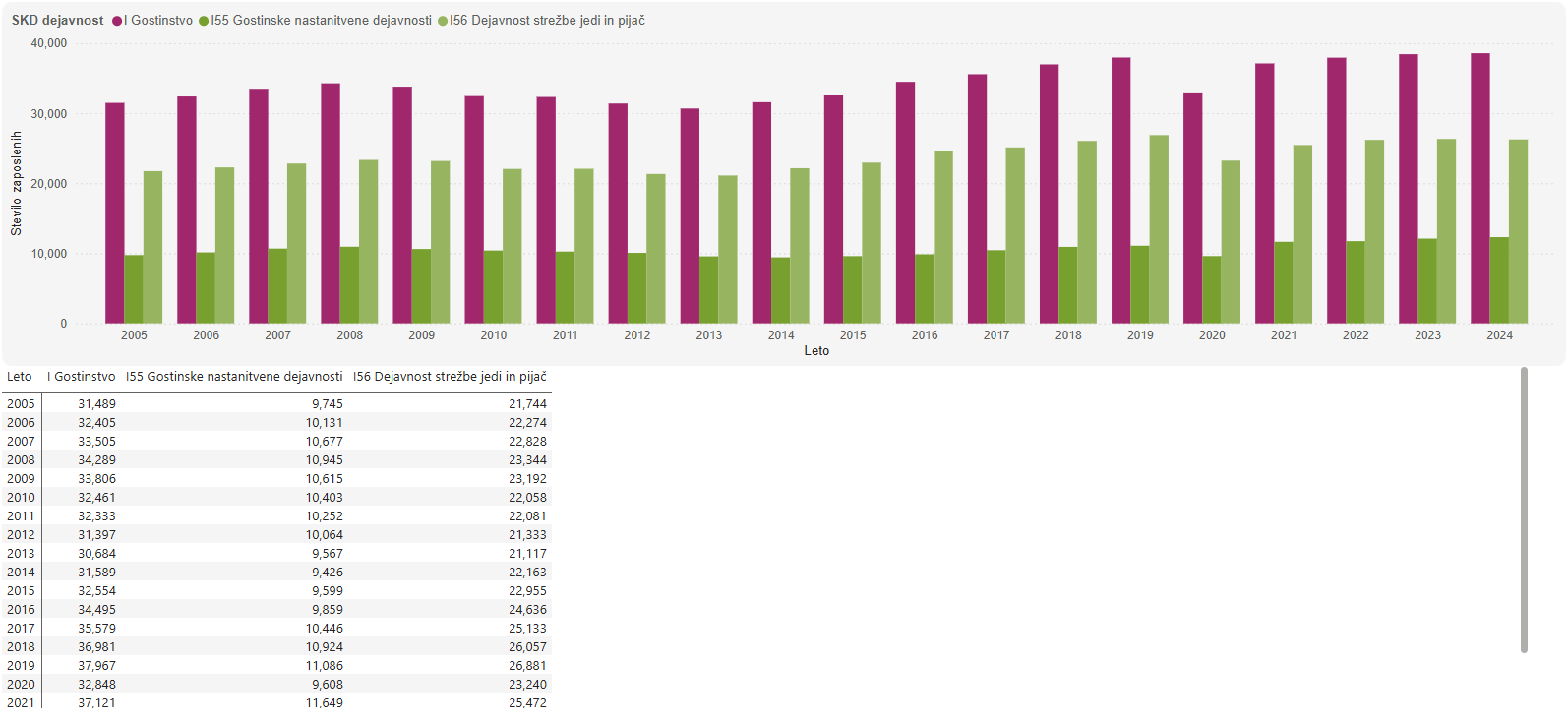
Economically Active Population by: SKD Activity, Year, Employment Status
Tourism has a multiplicative effect on a country’s economic activity. Among other things, it is an important economic sector with high potential for development and growth due to:
the positive effects it generates
the increase in economic benefits
and the share of employment in this sector
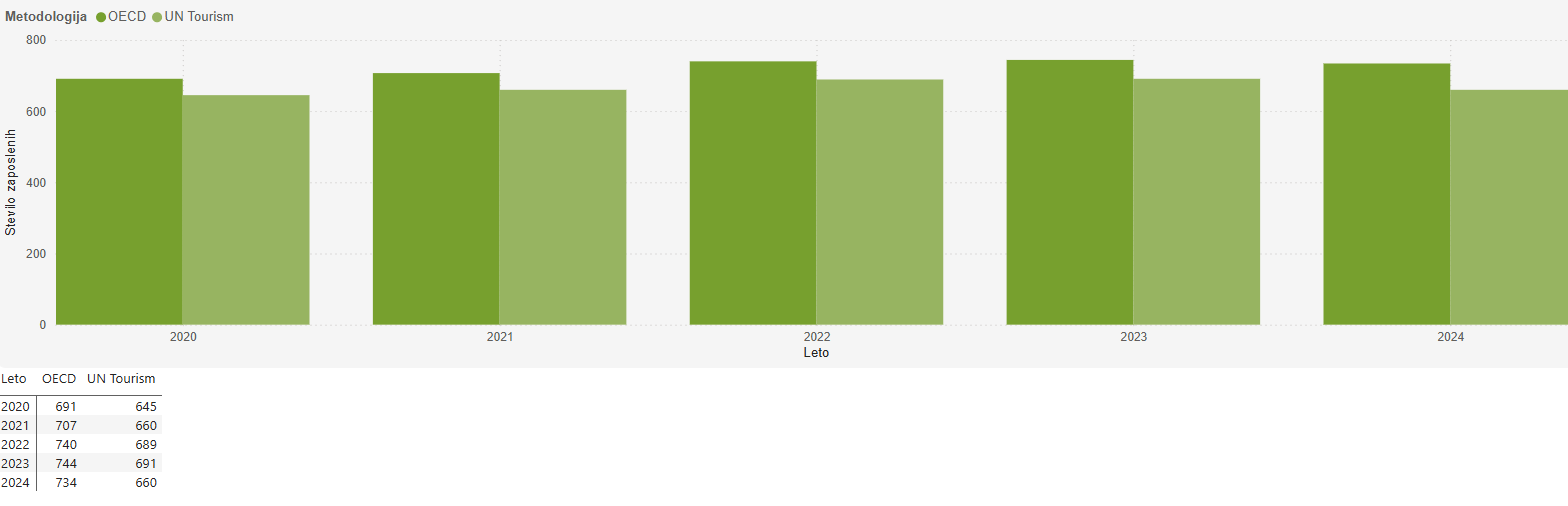
Employment in the tourism sector by SKD activity (I – Hospitality) is growing again, as shown in the graph above.
In July 2024, a new regular bus line to Rogla was established by Nomago, allowing public access to Rogla to no longer be limited to the summer free destination bus. The bus now runs multiple times daily.
In 2025, a total of 14,336 people used the bus service to Rogla (Source: Nomago).
The highest number of passengers traveled during the busiest months—January, February, and August—which is extremely important for the destination. Besides reducing traffic congestion, public transport also benefits other tourist infrastructure, such as parking facilities at Rogla. Passengers using the bus can access the ski area directly from the drop-off point, while more parking remains available for overnight guests.
The line is also attractive for skiers, as its schedule aligns with the opening hours of the ski resort.